March 12, 2026
0 minute read
The Renaissance of the Street: Why Digital OOH Is Transforming Modern Digital Production
March 12, 2026
0 minute read
Takeaways.
Digital OOH has reclaimed the dominance of traditional advertising by combining massive physical impact with digital agility.
The technical diversity of global screen networks requires specialized production expertise to maintain brand integrity.
Automation and AI tools are essential for managing high-volume DOOH, but they must be guided by human oversight.
Nearshore production in Costa Rica offers the perfect balance of cost efficiency, timezone alignment, and technical precision for global brands.
From Static Paper to Dynamic Experiences
There was a time when the physical landscape of our cities was defined by static billboards and printed posters. These were the titans of traditional advertising, commanding attention through sheer scale and permanence. Today, we are witnessing a powerful resurgence of this medium, but in a form that the advertisers of the past could only have dreamed of. Digital Out-of-Home (DOOH) advertising has taken the mantle of traditional print, combining the undeniable impact of a physical presence with the agility and precision of the digital world. In 2026, DOOH is no longer just a supporting player; it is the cornerstone of global brand awareness and a key channel within modern digital production strategies.
The Digital Transformation of the Urban Landscape
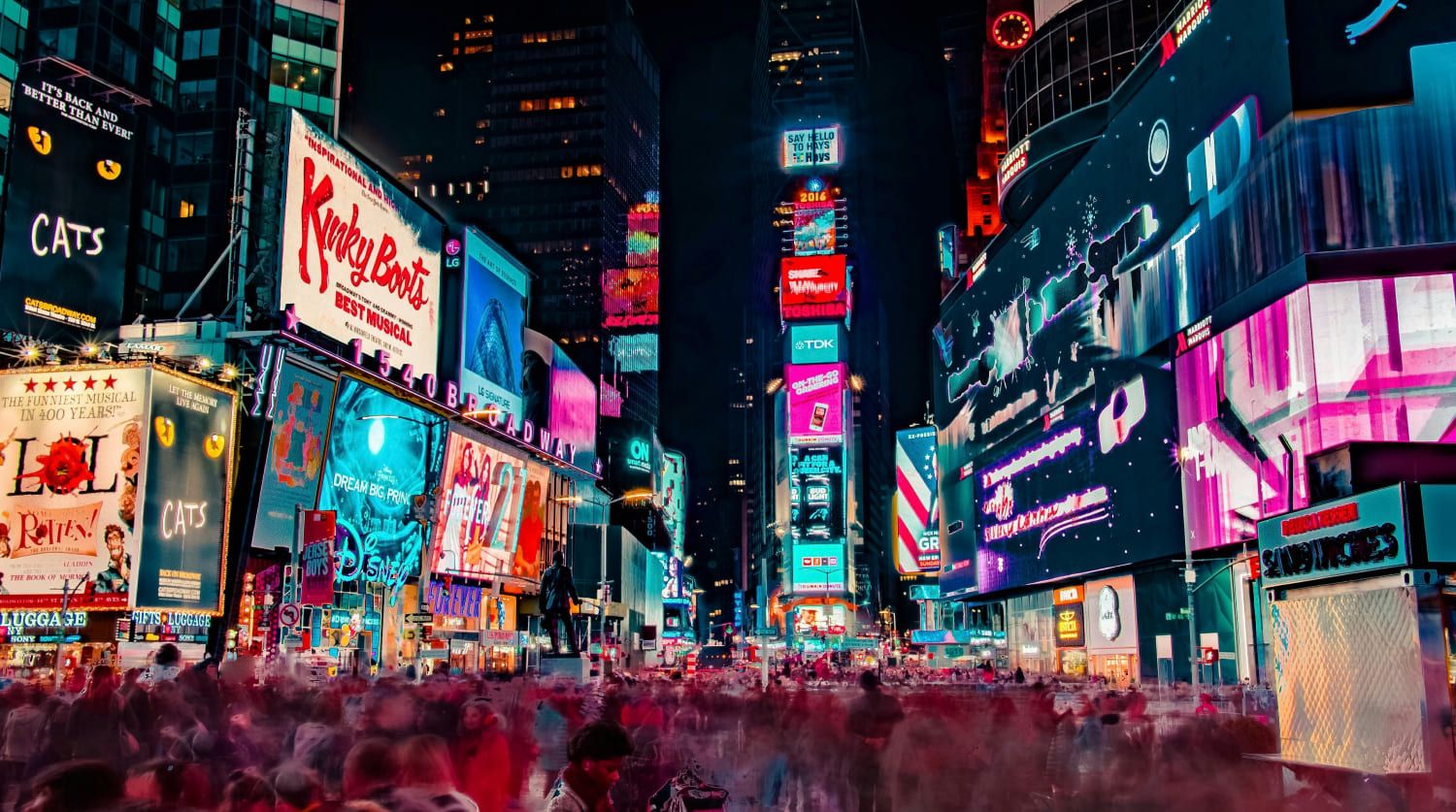
The evolution of OOH from paper to pixels has fundamentally changed how brands interact with consumers in the real world. Unlike a static billboard that remains unchanged for weeks, a digital screen is a dynamic canvas. It allows for real-time updates, contextual relevance, and high-fidelity motion that captures the eye in a crowded environment. This shift has restored the "event" status of outdoor advertising. When a global brand launches a synchronized campaign across Times Square, Piccadilly Circus, and Shibuya Crossing, it creates a cultural moment that social media alone cannot replicate.
This strength lies in the medium's unskippable nature. In an era of ad-blockers and fragmented streaming services, DOOH exists in the shared physical space. It cannot be turned off or scrolled past. However, this power comes with a significant technical burden. Managing a campaign that spans hundreds of different screen resolutions, orientations, and technical specifications requires a level of production discipline that many internal teams are simply not equipped to handle at scale.
For many organizations, this challenge becomes part of a larger effort around agency production scaling, where creative ideas must be translated into hundreds of technically precise assets without compromising brand consistency.
The street has become the most exciting canvas for digital creativity. At WAM Digital, we take pride in being the invisible force that ensures your brand looks its best on that canvas, no matter the scale or the location. As a trusted creative production partner, we believe that the right collaboration is the bridge between a great idea and world-class execution.
— Joshua Araya, Director of Operations at WAM Digital
The Complexity of Global Scale and Technical Consistency
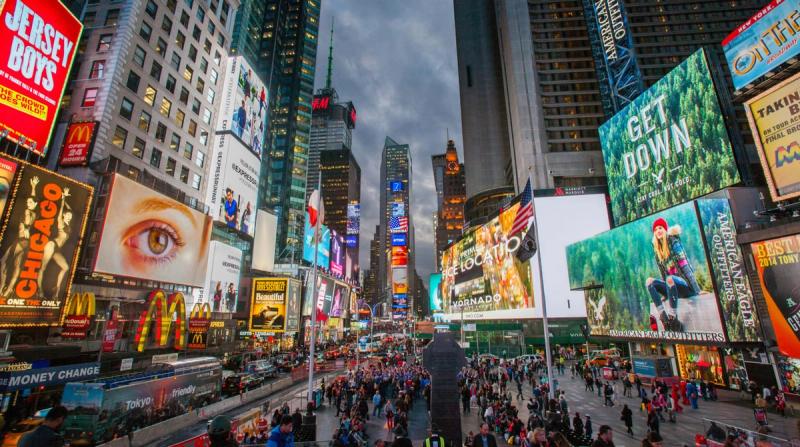
For a global brand, the challenge of DOOH is found in the "last mile" of production. A single creative concept must be adapted into hundreds of unique deliveries. One screen might be a massive, curved LED display on a skyscraper, while another is a small, vertical panel in an airport lounge. Each of these units has specific requirements for file formats, bitrates, and color profiles. If the technical execution is flawed, the brand's premium image is instantly compromised by pixelation, distorted aspect ratios, or incorrect color rendering.
Maintaining consistency across these variables is a logistical mountain. When production is kept in-house at a U.S. based corporate headquarters, the costs quickly become prohibitive. Internal designers, who should be focused on the next big creative breakthrough, find themselves buried in the tedious work of resizing and re-rendering files. This leads to burnout and, more importantly, a lack of specialized focus on the unique technical quirks of global ad networks.
This is where structured creative production workflows become critical. Without them, even strong campaign ideas can struggle to maintain quality across the many technical variations required for global DOOH distribution.
The shift from "creative design" to "technical production" is where many global campaigns begin to lose their polish.
Leveraging Intelligent Automation for High-Volume Precision
To manage the sheer volume of assets required for a modern DOOH campaign, the industry has turned toward a new generation of automation and AI tools. These systems are designed to ease the burden of versioning and ensuring consistency. By using intelligent templates and automated QC (Quality Control) protocols, it is now possible to generate hundreds of localized iterations of a master asset in a fraction of the time it once took. These tools can automatically verify that text remains within safe zones and that animations are optimized for the specific refresh rates of different hardware.
However, as we have explored in previous discussions, these tools are not a replacement for professional judgment. They are accelerators. In a global-scale DOOH campaign, automation handles the repetitive tasks of resizing and formatting, but a human expert must still verify the final output.
The goal is to create a workflow where technology supports scalable content production, ensuring that high volumes of assets can be delivered quickly without sacrificing brand integrity. This synergy between automation and human expertise is what allows a campaign to move from "good enough" to "flawless" on the world stage.
The Strategic Advantage of Nearshore Production in Costa Rica
This is where the decision of where to produce your work becomes a competitive advantage. While many U.S. brands have traditionally looked to in-house teams or offshore vendors in distant time zones, the move toward Costa Rican production represents a more sophisticated strategy. By partnering with a team in Costa Rica, such as WAM Digital, global brands gain access to a powerhouse of technical talent that operates in the same window of time as their headquarters. This eliminates the "overnight delay" that often stalls production cycles.
Working with a nearshore creative agency allows brands to maintain close collaboration while benefiting from a highly specialized production infrastructure. As a digital production agency, WAM Digital supports global brands and agencies that need reliable partners capable of managing the technical complexity of large-scale campaigns.
Outsourcing to Costa Rica provides a level of cost efficiency that allows budgets to go further, but without the cultural and linguistic barriers of traditional offshoring. The production of DOOH assets requires constant communication and a deep understanding of brand nuances.
At WAM Digital, we act as a creative production partner for agencies and brands navigating complex global campaigns. Our team supports agency production scaling by managing the technical complexities of global screen networks and the precision required for automated versioning. Through this model, brands gain access to a flexible creative outsourcing agency capable of delivering consistent quality at scale.
This allows creative directors to focus on the vision while we guarantee that the execution is perfect, every time, in every city.
Related service.